The Charterhouse of Parma
The Charterhouse of Parma by Stendhal, available in Auren as a public-domain ebook in the United States.
I
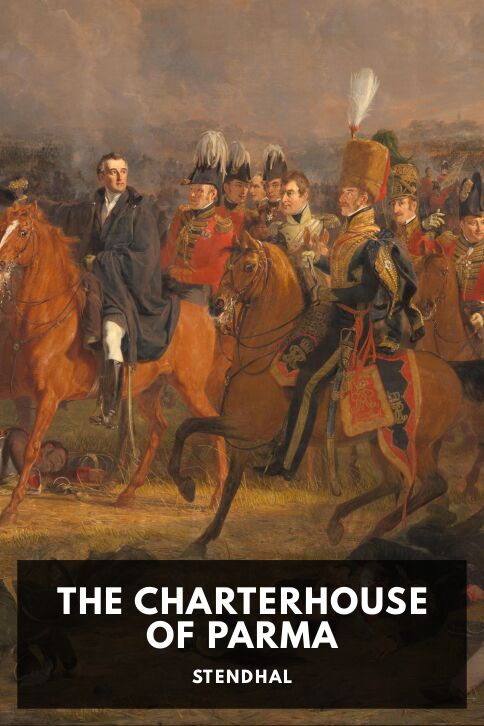
On the 15th of May, 1796, General Bonaparte made his entry into Milan at the head of that young army which had shortly before crossed the Bridge of Lodi and taught the world that after all these centuries Caesar and Alexander had a successor. The miracles of gallantry and genius of which Italy was a witness in the space of a few months aroused a slumbering people; only a week before the arrival of the French, the Milanese still regarded them as a mere rabble of brigands, accustomed invariably to flee before the troops of His Imperial and Royal Majesty; so much at least was reported to them three times weekly by a little news-sheet no bigger than one’s hand, and printed on soiled paper.
In the Middle Ages the Republicans of Lombardy had given proof of a valour equal to that of the French, and deserved to see their city razed to the ground by the German Emperors. Since they had become loyal subjects, their great occupation was the printing of sonnets upon handkerchiefs of rose-coloured taffeta whenever the marriage occurred of a young lady belonging to some rich or noble family. Two or three years after that great event in her life, the young lady in question used to engage a devoted admirer: sometimes the name of the cicisbeo chosen by the husband’s family occupied an honourable place in the marriage contract. It was a far cry from these effeminate ways to the profound emotions aroused by the unexpected arrival of the French army. Presently there sprang up a new and passionate way of life. A whole people discovered, on the 15th of May, 1796, that everything which until then it had respected was supremely ridiculous, if not actually hateful. The departure of the last Austrian regiment marked the collapse of the old ideas: to risk one’s life became the fashion. People saw that in order to be really happy after centuries of cloying sensations, it was necessary to love one’s country with a real love and to seek out heroic actions. They had been plunged in the darkest night by the continuation of the jealous despotism of Charles V and Philip II; they overturned these monarchs’ statues and immediately found themselves flooded with daylight. For the last half-century, as the Encyclopædia and Voltaire gained ground in France, the monks had been dinning into the ears of the good people of Milan that to learn to read, or for that matter to learn anything at all was a great waste of labour, and that by paying one’s exact tithe to one’s parish priest and faithfully reporting to him all one’s little misdeeds, one was practically certain of having a good place in Paradise. To complete the debilitation of this people once so formidable and so rational, Austria had sold them, on easy terms, the privilege of not having to furnish any recruits to her army.
Edition source: Standard Ebooks